

Issue 27 • 25-May-2006


 Sizzling Summer Swimwear








|

On the Beat
As a producer/remixer, I get asked about what I do, and since I have a couple of tracks being released in the next couple of weeks, I thought it’d be cool to give an overview of the production process.
A producer, in the dance arena specifically, is someone who makes the beats and music of a song. A remixer is a producer who takes elements of an original song and creates a new song with some of those elements.
I started remixing in late 2001. For my first endeavor I remixed Petula Clark’s “Downtown.” It was an agonizing process and the result was not fit for public consumption. In fact, it was a track only a mother could love, and even mine wasn’t buying it. However, I learned a lot from that experience and continue to gain more experience with each new project.
When I’m hired to do a remix, the label sends me elements from the single; most often just the vocals, known as acapellas. In some cases I will not even get the actual single, the reference track, because the label wants me to come up with my own take on the vocals, creating a whole new vibe altogether.
This was the case with L.E.X., featuring Niki Haris’ “Let Me Hear Music,” which will be out next month. The end result is a different melody and vibe than the original mix. Doing this creates a wider audience for the release. Many will prefer the warm, soulful take of L.E.X.’s original. Others will prefer the old skool, New York feel of mine.
|

Usually I’m left to “do my thing” with little or no direction. This gives a great deal of creative freedom, but can be bad if I head down the wrong road. To mitigate this risk, I turn in a rough draft to make sure I’m on the right track, get their feedback and continue with the process.
The process begins with calculating the beats per minute (BPM) of the original. Then I decide what the BPM of the remix will be. A general rule is 127-132 for house. I then stretch or contract the original vocals to fit the remix’s BPM. The pitch remains untouched, so sped-up vocals don’t sound like a chipmunk’s.
Next I take a drive on the freeway with the windows down and the “’pellas” blaring. It’s amazing what wind, 18-wheelers and whizzing motorcycles do to inspire tracks! It’s through these random sounds I get a rhythm and sometimes even a melody. It may sound bizarre, but it works for me.
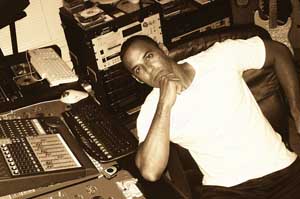
I then take the ideas in my head back to the studio and get to work. At the heart of the project is a digital audio workstation (DAW); it’s the main area where the track gets built. Different remixers prefer different DAWs, but the feature sets of each are getting to the point where it’s just a matter of comfort. Pro Tools is very popular. De Leon and I use Sonar for our projects, as does L.E.X. Others, such as Warren Rigg, Tony Moran and Reed McGowan, prefer Logic. Still others, such as Paulo and Todd Dutkevitch, prefer Cubase.
For tribal tracks I spend quite a bit of time coming up with interesting rhythms and really focusing on the quality of each individual percussive piece. To me, these elements are the second star, and the project is about making it a powerful duet that gets people dancing. I use Battery 2, DR-008 and Intakt for percussion, which “plug in” to the DAW. They are loaded with individual hits recorded from live drums. I can also load them up with sounds I’ve recorded myself – power tools, mouth noises (listen closely for the human beatbox on “Let Me Hear The Music”), finger snaps – even my dog sighing. Then I program the patterns into the DAW, and these plug-ins play like a live percussionist.
|
De Leon and I come up with some pretty novel approaches for tribal grooves. This is most apparent on our latest endeavor with singer/songwriter Breathwaite. “Don’t Lie” gets released on Taste Traxx/Kult Records in the next couple of weeks. It’s been fun having people try to guess what sounds we used for some of the percussion!
Next I play the beats and the vocals to come up with the bass line. Once the bass is down, the foundation is in place. Then I look for elements that make the vocals and percussion shine.
There’re a ton of synthesizers out there. And what’s in the arsenal of most remixers now is Virtual Studio Technology instruments (VSTi). A VSTi is a synthesizer that runs inside your DAW. I use a MIDI keyboard, which looks like a piano, to control it. I press record in my DAW and then play the keyboard. The notes are recorded in the DAW, and the VSTi plays the notes. What’s great about this approach is that I record the notes once. After that I can tweak the VSTi as much as I need to until it makes the sounds I want. These synths come with tons of presets, so getting a sound in the ballpark and then tailoring it to taste is easy. Two real workhorses are Z3TA+ and Albino 2. At a fraction of the cost of their hardware counterparts (only about $200 each), they’re a real must.
Once all the pieces are in place, I use engineering techniques like compression and EQ to make each element “sit well” in the overall mix. Then the file is ready to be shipped out.
Some labels prefer a “master,” a file that sounds as polished, loud and clear as other tracks DJs will be spinning. Others prefer a “pre-master” file with very little polish and “lots of headroom.” One advantage of having lots of headroom is that their engineers will be able to give the original and all its remixes the same cohesive, sonic sheen and clarity.
|

The label then sends out all the remixes to the Billboard reporters, well-known DJs from around the country that represent the whole club scene. If the reporter likes the track or it gets a good dance floor reaction, he “charts it” by putting it in his Top Picks report. These reports are what drive the Billboard Dance Chart. Having a hit on the charts increases a remixer’s visibility and can equate to more lucrative deals for future projects. Often simultaneously, the label will prepare the track for vinyl (yes, vinyl!), CD and digital download services like Beatport to be sold to the public.
You can hear samples of my latest remixes at www.myspace.com/fmassi.
Also, don’t forget to catch DJ Jamie Sanchez on Saturday, May 27, at Bacchus House for their Commando Military Party.

contact us | advertise